
Can I talk to my AI character?
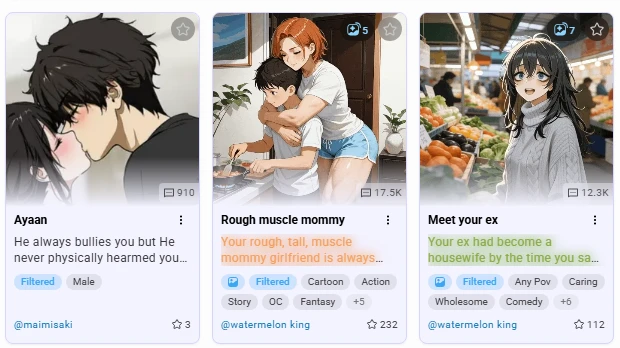
Can I talk to my AI character? Yes. In 2025, AI companions are used by tens of millions of people every month for roleplay, language practice, writing, and casual conversation. Large language models can respond in seconds, remember previous chats, and keep a consistent personality across multiple sessions. Many users spend more than 30 minutes per conversation, while some return daily for ongoing stories or character development. AI characters cannot think or feel like humans, but they can produce natural dialogue that makes conversations smooth, engaging, and easy to continue.
People no longer use AI characters only to ask questions. A growing number of users open an app because they want a conversation instead of a search result. According to market forecasts published in 2025, the global AI companion market is expected to exceed USD 24 billion before 2030, supported by better language models, voice interaction, and memory systems. That steady growth has also increased the number of platforms offering customizable AI personalities with different backgrounds, interests, and speaking styles.
Instead of following a fixed script, modern AI characters generate each reply from the context of the conversation. A question about books can naturally become a discussion about travel, movies, or personal goals without restarting the chat.
That flexibility changes how conversations feel. Older chatbots often failed when users changed topics, but today's models can connect different subjects while maintaining the same personality. Many systems also save conversation history, allowing the character to remember names, hobbies, or unfinished stories from previous sessions. Memory length varies by platform, but continuity has improved noticeably since 2023.
A typical AI character can support many different activities.
| Activity | Example |
|---|---|
| Daily conversation | Casual chat after work |
| Language learning | Practice English or Spanish dialogue |
| Creative writing | Develop stories or fictional characters |
| Gaming | Continue roleplay outside the game |
| Brainstorming | Generate ideas for articles or projects |
Because conversations continue naturally, many users treat the AI as a regular discussion partner rather than a simple assistant.
The quality of the experience depends on the platform. Some services focus on productivity, while others are built for roleplay and entertainment. Users looking for highly customizable personalities often compare different services before choosing one. One example is https://crushon.ai/, which allows users to chat with AI characters created by the community and customize conversation styles for different scenarios.
Personality consistency has improved because newer language models use larger context windows and stronger instruction following. A conversation started in the morning can often continue hours later without repeating the same information.
Although conversations may feel realistic, AI characters do not experience emotions. When an AI says it is happy, excited, or worried, those words are generated because they fit the conversation rather than reflecting genuine feelings. This distinction matters when discussing personal topics. AI can provide conversation, explanations, and writing help, but it should not be viewed as a replacement for family members, friends, licensed counselors, or medical professionals.
Research on human-computer interaction has also shown that many people are willing to share more information with conversational systems than with strangers. Several studies published between 2023 and 2025 found that users often describe personal goals, creative ideas, or everyday concerns because the conversation feels private and there is no fear of social judgment. That does not mean every platform stores information the same way. Privacy policies, retention periods, and personalization features differ between companies, so reviewing platform documentation before sharing sensitive information remains a sensible habit.
Voice technology has also changed how people interact with AI characters. Instead of typing, users can now speak naturally and receive spoken replies with very little delay. Many systems combine speech recognition, speech synthesis, and large language models into a single conversation. In demonstrations released during 2024 and 2025, response times often dropped below two seconds, making conversations feel closer to speaking with another person than exchanging text messages.
The next step is multimodal communication. AI characters are beginning to understand text, images, voice, and sometimes video within the same conversation. A user can upload a photo, ask questions about it, continue discussing travel plans, and later return to the same topic without starting over. Longer memory windows and better reasoning have also reduced repetitive responses compared with earlier chatbot generations.
For writers, students, language learners, and people who enjoy roleplay, AI characters offer a different type of conversation from traditional search engines. Instead of presenting a list of links, they respond as an individual personality that can adapt to changing topics, remember previous interactions, and continue discussions over time. As language models continue improving through 2026 and beyond, conversations are expected to become more natural, while users will still benefit from understanding that AI generates language patterns rather than human thoughts or emotions.